

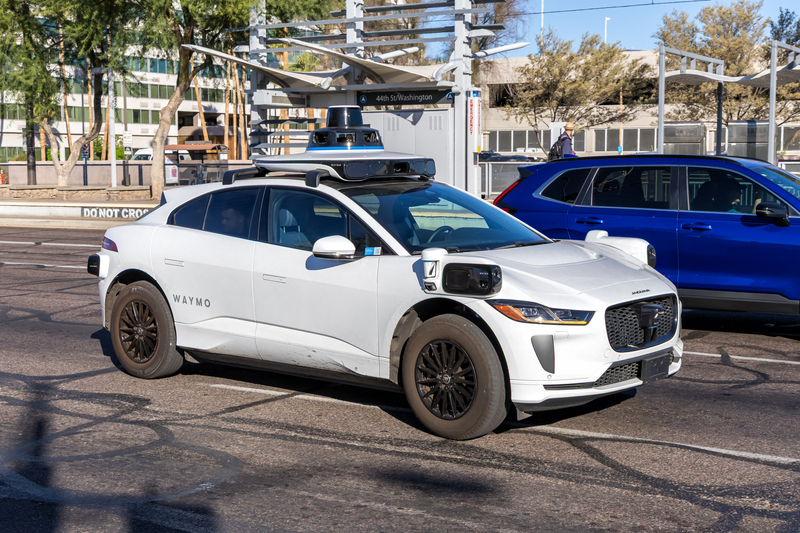
Imagine sitting in the back seat of a driverless vehicle as it approaches a highway construction zone. The lanes merge, construction cones scatter across the pavement, and instead of slowing down or pulling off safely, the vehicle accelerates up to 70 mph straight through the active work zone.
That exact nightmare scenario played out for a California couple traveling home to San Francisco. Believing they were about to crash into construction barriers, police vehicles, and heavy trucks, passenger Elliot Slade turned to his fiancée and said, “We’re done. This is it. We’re dead. We’re going to die right here in the Waymo.”
The vehicle eventually exited into a residential neighborhood and stopped. However, the aftermath left many stunned: after experiencing 20 seconds of sheer terror, the passengers were offered $120 in free ride credits as compensation. As autonomous vehicles (AVs) become a daily presence on California roads, incidents like this highlight crucial legal questions about consumer safety and rider rights.
Legal and Safety Gaps in Autonomous Rideshare
Inside a standard Uber or taxi, a human driver sits behind the wheel. If the vehicle speeds recklessly, you can command the driver to pull over or physically intervene in an emergency. Inside a driverless vehicle, passengers face a complete lack of mechanical control. With no accessible steering wheel or brake pedal and delayed remote support, software defects in edge-case scenarios – like construction detours – present severe personal safety and legal risks.
What to Do If Your Robotaxi Malfunctions
If you are ever inside a driverless vehicle that is behaving erratically, take these steps to protect your safety and legal rights:
- Use On-Board Emergency Controls: Press the physical “Pull Over” or “Emergency Stop” button on the center console, roof panel, or inside the mobile app.
- Initiate Support Calls Immediately: Trigger a live connection with remote assistance through the vehicle screen or phone app right away.
- Document Everything in Real Time: Record video of the dashboard, exterior road conditions, and software alerts displayed in the cabin. Keep track of the time, location, and vehicle ID number.
- Seek Medical Attention: Severe fright can result in genuine psychological trauma or PTSD. Seek medical evaluation and document these impacts for any future legal claim.
- Do Not Accept Settlement Credits: Accepting ride vouchers, refunds, or updated terms-of-service pop-ups could be argued as a waiver of future legal rights or mandatory arbitration.
Holding AV Companies Accountable
When a human driver causes a crash, claims fall under standard negligence law. But when a driverless vehicle fails due to software glitches or sensor failures, liability shifts toward product liability and manufacturer negligence. At GB Legal, we believe tech innovation must never come at the expense of passenger safety – and a $120 ride credit does not absolve technology giants from their duty of care.
We represent people injured as a result of the careless and reckless acts of others. At the end of the day your case can only be settled one time and you need to know all of the facts beforehand. Insurance companies have paid our clients hundreds of millions of dollars in compensation because we uncover the facts. When insurance companies fail to offer full compensation and we are not intimidated at the prospect of going to trial. We help with serious injuries that require serious representation. We are the Law Offices of Guenard & Bozarth, LLP. Our attorneys have more than 60 years of experience specializing in only representing injured people. Call GB Legal 24/7/365 at 916-714-7672 or visit www.gblegal.com