

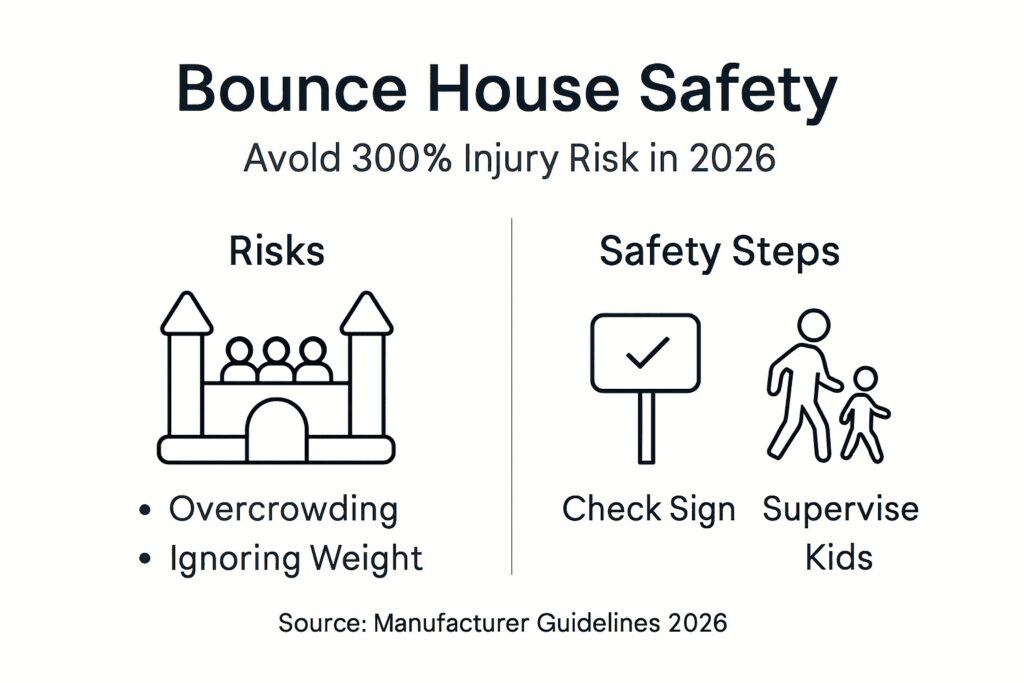
A bounce house may be the highlight of a child’s birthday party, but they send tens of thousands of children to emergency rooms every year. When an afternoon of jumping turns into serious trauma, injured guests and hosts alike often face complex legal questions regarding fault and financial recovery.
Common Bounce House Injuries. Because bounce houses combine unstable footing, high energy, and confined spaces, accidents happen quickly. The most frequent injuries include:
- Fractures and Broken Bones: Severe impacts to wrists, arms, ankles, teeth and collarbones from awkward landings or mid-air collisions.
- Concussions and Head Trauma: Colliding with other jumpers or striking hard ground after being ejected from an entrance ramp.
- Spinal and Neck Injuries: Strains and dislocations caused by unsupervised somersaults or larger children falling onto smaller kids.
- Wind-Related Ejections: Severe, multi-system trauma occurring when wind gusts catch and lift improperly anchored inflatables.
Determining Liability: Who Is Legally Responsible? Establishing liability in an inflatable accident depends on how and why the incident occurred. Typically, claims involve one or more of the following parties:
- The Property Owner or Host (Premises Liability): Homeowners owe invited guests a duty of reasonable care. A host may be held liable under premises liability if they failed to supervise children, allowed overcrowding beyond manufacturer limits, or mixed disparate age groups together inside the unit.
- The Rental and Setup Company (Negligence): Commercial rental vendors must supply safe equipment and anchor it according to strict safety standards. If a vendor uses inadequate stakes, sets up on hazardous terrain, or fails to provide essential wind-speed operating limits, they can be held liable for negligence.
- The Manufacturer (Product Liability): If sudden deflation or structural failure stems from defective vinyl seams, torn anchor points, or a faulty blower motor, the designer or manufacturer may face product liability claims.
Key Steps Following an Inflatable Accident
- Seek Prompt Medical Care: Prioritize medical treatment and obtain thorough diagnostic documentation for all injuries.
- Preserve the Scene: Photograph the bounce house, stakes, tethers, blower system, warning labels, and surrounding weather conditions before anything is packed away.
- Retain All Documents: Keep copies of rental contracts, operator instructions, and liability waivers. Standard liability waivers do not automatically shield parties from gross negligence or defective equipment.
Navigating multiple insurance policies and disputed liability requires clear evidence and decisive action. The personal injury attorneys at Guenard & Bozarth investigate setup protocols, equipment maintenance, and supervision standards to help injured families recover the compensation they need for medical bills, rehabilitation, and long-term care.
We represent people injured as a result of the careless and reckless acts of others. At the end of the day your case can only be settled one time and you need to know all of the facts beforehand. Insurance companies have paid our clients hundreds of millions of dollars in compensation because we uncover the facts. When insurance companies fail to offer full compensation, we are not intimidated at the prospect of going to trial. We help with serious injuries that require serious representation. We are the Law Offices of Guenard & Bozarth, LLP. Our attorneys have more than 60 years of experience specializing in only representing injured people. Call GB Legal 24/7/365 at 916-714-7672 or visit www.gblegal.com