

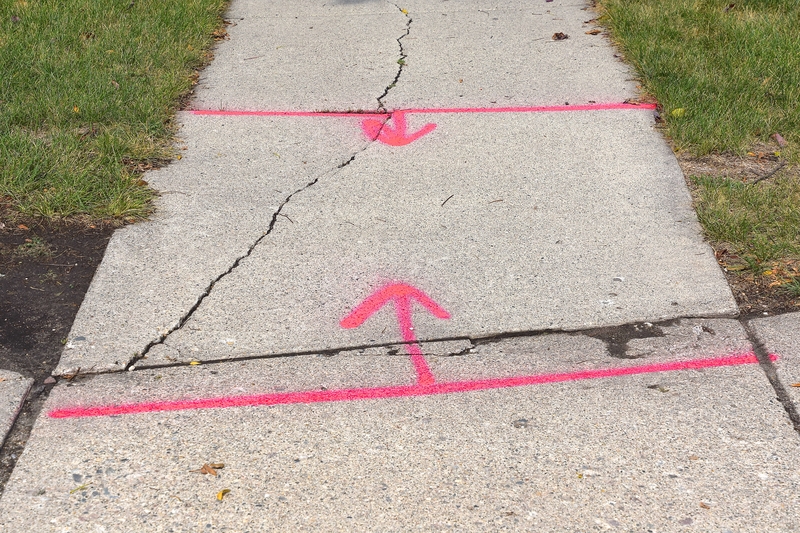
If an insurance company tells you the sidewalk crack that caused your injury was “too minor” to matter, they are invoking the trivial defect doctrine. This defense allows a judge to decide that a walkway irregularity was legally too small to create a substantial risk of harm. Rather than ending your case outright, this rule targets the property owner’s duty of care. A defect deemed trivial means no legal duty was owed, but this argument can fail when the hazard is evaluated alongside factors like poor lighting, debris, or jagged edges.
When you are hurt on a broken walkway, you should not accept an insurer’s claim at face value. The premises liability team at Guenard & Bozarth, LLP (GBlegal.com) reviews measurements, site conditions, and maintenance history to ensure property owners and public entities are held accountable.
How the Trivial Defect Rule Works in California. The trivial defect doctrine exists because California law recognizes that concrete shifts over time due to weather and tree roots, making perfectly level surfaces impossible to guarantee. Under Government Code § 830(a), a dangerous condition is defined as one creating a substantial risk of injury when used with due care. Government Code § 830.2 allows courts to determine as a matter of law that a risk was so minor that no reasonable person would deem it dangerous. Courts apply this same standard to private landowners under Civil Code § 1714(a).
It is also important to note two critical statutory limits under Government Code § 830.5: the occurrence of the accident itself is not proof that the property was dangerous, and post-fall repairs cannot be used as direct evidence that the walkway was hazardous before your fall.
Why Measurements Alone Do Not Decide Your Case. Height differential is only a starting point. Defense attorneys frequently lead with a tape-measure reading, but California courts evaluate the totality of the circumstances. A minor elevation change can support a valid injury claim when aggravating factors are present:
- Poor or obstructed lighting at the time of the incident
- Sand, leaves, or water concealing the edge of the hazard
- Jagged, crumbling concrete instead of a clean, flat seam
- High pedestrian traffic or visual distractions in the area
- A documented history of prior falls or deferred maintenance
Public Entities and Critical Deadlines. Tripping on a public sidewalk introduces unique legal requirements. Under the California Government Claims Act (Government Code § 911.2), you must present a written claim to the responsible city or county within six months of the injury. This is a much stricter timeframe than the general two-year statute of limitations for personal injury against private property owners under Code of Civil Procedure § 335.1.
Determining who is responsible for a sidewalk can also be complex. While Streets and Highways Code § 5610 requires abutting property owners to maintain sidewalks, California courts hold that this duty runs to the municipality, meaning private owners are generally only liable if they altered or created the hazard. Early legal review helps identify the correct party before deadlines pass.
How the legal team at Guenard & Bozarth overcome the defense and protect your right to recovery. Defendants frequently combine the trivial defect defense with arguments about open and obvious hazards or lack of notice. Under California’s pure comparative negligence rule, even if an insurer argues you were distracted, your recovery is reduced by your percentage of fault rather than eliminated entirely. To build a strong case, document the scene immediately. Take photos with a ruler or small object for scale, take wide-angle shots of the surrounding lighting, report the incident in writing, seek prompt medical care, and preserve the footwear you were wearing.
We represent people injured as a result of the careless and reckless acts of others. At the end of the day your case can only be settled one time and you need to know all of the facts beforehand. Insurance companies have paid our clients hundreds of millions of dollars in compensation because we uncover the facts. When insurance companies fail to offer full compensation, we are not intimidated at the prospect of going to trial. We help with serious injuries that require serious representation. We are the Law Offices of Guenard & Bozarth, LLP. Our attorneys have more than 60 years of experience specializing in only representing injured people. Call GB Legal 24/7/365 at 916-714-7672 or visit www.gblegal.com
