

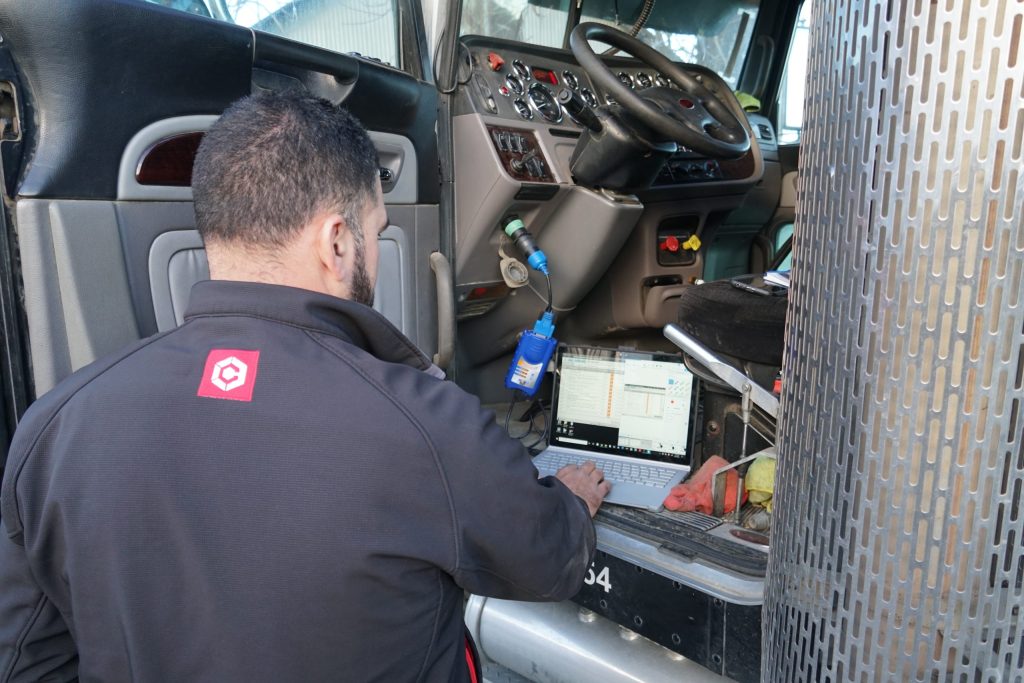
If you’ve ever been involved in an accident with a commercial semi-truck, you know how overwhelming the aftermath can be. While you focus on healing, the trucking company and their insurers are hard at work building a defense to minimize their liability. In these complex personal injury claims, success often hinges on objective, undeniable evidence. That is where the truck’s “black box” comes in.
Like airplanes, modern commercial trucks are equipped with specialized recording devices. In the legal world, retrieving this data can mean the difference between a denied claim and recovering the full compensation you deserve. What exactly is a truck’s “Black Box”?
When we refer to a truck’s black box, we are typically talking about a combination of electronic systems onboard the rig. The two most critical systems are:
• The Electronic Control Module (ECM): The central computer of the truck. It continuously monitors the engine’s performance, vehicle speed, and diagnostic codes.
• The Event Data Recorder (EDR): This system is triggered by a “critical event,” such as sudden hard braking or a sudden change in velocity (an impact). It captures a detailed snapshot of the vehicle’s telemetry in the seconds immediately leading up to, during, and after the crash. Additionally, most commercial fleets utilize Electronic Logging Devices (ELDs) to track driver service hours, ensuring they comply with federal rest-break regulations.
Here’s how the “black box” data can prove your case. In a typical car accident, resolving the claim often devolves into a “he-said, she-said” argument. A truck’s black box removes the guesswork by providing hard, digital facts. Here is what the data can reveal:
• Speeding: The EDR records exactly how fast the truck was traveling. If the speed limit was 55 mph and the box shows the truck was moving at 70 mph, speed-related negligence is instantly established.
• Braking Patterns: The data shows exactly when the driver hit the brakes—or if they hit them at all. A lack of braking or a late reaction strongly suggests distracted driving or falling asleep at the wheel.
• Hours of Service Violations: By cross-referencing ELD data, we can prove if a driver was on the road longer than legally permitted, leading to driver fatigue.
Gathering this data means time is of the essence. Trucking companies are not required to keep black box data forever. In fact, many systems operate on a loop, meaning new driving data will automatically overwrite the crash data within weeks – or even days once the truck is put back in service.
To prevent this, an experienced injury attorney must immediately send a formal spoliation letter to the trucking carrier. This legally demands that they preserve all vehicle components, electronic logs, and black box data intact. At GB Legal, we move quickly to secure this evidence before it is lost. If you or a loved one has been injured in a commercial truck accident we can help. Let us uncover the truth and fight for the recovery you deserve.
We represent people injured as a result of the careless and reckless acts of others. At the end of the day your case can only be settled one time and you need to know all of the facts beforehand. Insurance companies have paid our clients hundreds of millions of dollars in compensation because we uncover the facts. When insurance companies fail to offer full compensation we are not intimidated at the prospect of going to trial. We help with serious injuries that require serious representation. We are the Law Offices of Guenard & Bozarth, LLP. Our attorneys have more than 60 years of experience specializing in only representing injured people. Call GB Legal 24/7/365 at 916-714-7672 or visit www.gblegal.com