

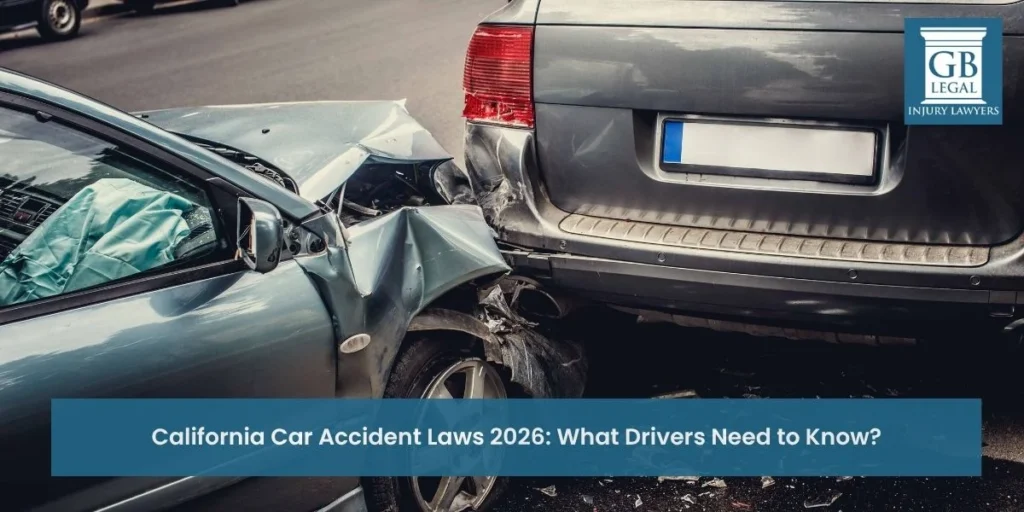
California car accident laws changed significantly in the past two years, and 2026 adds more updates on top of that. The state runs on a fault-based system with pure comparative negligence, meaning you can recover damages even if you’re partly at fault, but the numbers that matter — insurance minimums, DMV reporting deadlines, filing windows — all shifted recently.
Missing one of these deadlines or misreading how fault gets split can shrink a settlement or bar a claim outright, and insurance adjusters count on drivers not knowing the current rules. Understanding what changed puts you in a stronger position from the moment a crash happens, not after the damage is already done.
Guenard & Bozarth, LLP has represented Elk Grove and Sacramento drivers hurt by careless driving for close to four decades. This guide walks through what actually changed and what to do about it.
How Fault Works After a California Car Accident
California splits fault by percentage instead of using an all-or-nothing rule. Under pure comparative negligence, a jury or insurance adjuster can find you 20% responsible and the other driver 80%, and you may still collect 80% of your damages. An at-fault driver’s insurer has every incentive to inflate your share, which is why raw percentages from an adjuster’s first offer deserve a second look before you sign anything.
California’s New Insurance Minimums
Every policy issued or renewed after January 1, 2025 must meet higher bodily injury liability and property damage limits under Senate Bill 1107, replacing minimums that hadn’t moved since 1967:
- $30,000 for bodily injury or death to one person
- $60,000 for bodily injury or death to more than one person per accident
- $15,000 for property damage per accident
The California Department of Insurance notes these are still liability-only figures, so if your medical bills or repair costs exceed them, uninsured motorist coverage or a personal injury claim against other assets may be your only path to full compensation.
What California Law Requires You to Do After a Crash?
State law requires every driver involved in a collision to file an SR-1 report with the DMV within 10 days if anyone was injured, no matter how minor, or if property damage exceeds $1,000. This applies whether or not you caused the crash, and it’s separate from any police or California Highway Patrol (CHP) report.
Beyond the DMV report, document everything at the scene: photos of vehicle positions and damage, the other driver’s information, and names of witnesses. This record becomes the backbone of your case if your attorney has to push back on the insurer’s version of events.
New 2026 Rules That Can Affect Your Claim
California expanded its “slow down, move over” rule in 2026 under Assembly Bill 390. Drivers must now change lanes or slow down for any stationary vehicle showing hazard lights, not just tow trucks and emergency vehicles. If you get rear-ended while pulled over with your hazards on, this rule gives you a stronger argument that fault lies with the other driver.
How Long You Have to File a Claim?
California’s statute of limitations gives most injury victims two years from the crash date to file a lawsuit, while property damage claims get three years. There are exceptions: if the injury wasn’t discovered right away, or if the injured person was under 18 at the time of the crash, the deadline can start later or pause for a while. Cases against a government entity, like a crash involving a Sacramento County vehicle, carry a much shorter six-month claim window.
Waiting to talk to a California car accident attorney is one of the most common reasons a valid claim gets barred entirely. Courts across California generally won’t extend your filing deadline just because settlement talks are still going on. In some cases, both sides can agree in writing to pause the clock, but you can’t count on that happening.
Frequently Asked Questions
Do I need a police report if officers never came to the scene?
Not required, but it helps a lot. Without one, your SR-1 filing and photos from the scene become your strongest evidence of what happened. Write down everything you remember while it’s fresh, since insurance adjusters lean hard on gaps in documentation.
What if I didn’t feel hurt right away, can I still file a claim later?
Yes, plenty of injuries like whiplash or concussions don’t show symptoms for days. See a doctor as soon as something feels off, because a gap between the crash and treatment gives insurers an opening to argue something else caused it. You’re still working against the same filing deadline, so don’t wait too long to get checked out.
Does hiring a car accident attorney cost anything upfront?
Most personal injury firms, Guenard & Bozarth included, work on contingency. No fee unless you win, so there’s nothing out of pocket to start. The first consultation is free.
What if the crash involved a rideshare or delivery driver?
Companies like Uber and Lyft carry commercial policies with much higher limits than a personal policy, sometimes $1 million with a passenger in the car. Which policy applies depends on whether the app was on and whether a ride was in progress. Sorting that out usually isn’t something you want to do alone.
Will my case go to trial, or does it usually settle?
Most car accident claims settle before trial. Insurers generally want to avoid the cost and unpredictability of a jury, so settlement talks tend to pick up once your medical treatment stabilizes. Trial stays on the table if the offer doesn’t come close to covering what you’ve lost.
Guenard & Bozarth, LLP: Your California Car Accident Law Firm
Getting hit by another driver is disorienting enough without also trying to track DMV deadlines and figure out whether a new insurance law applies to your case. Glenn Guenard, Ross Bozarth, and Anthony Wallen have spent decades untangling exactly this kind of confusion for Elk Grove and Sacramento families, and they know which details insurance adjusters count on you missing.
Contact our firm today for a free consultation, and let someone who knows the current rules handle the parts you shouldn’t have to figure out alone.